
Bipedal and Quadrupedal Mobility in One Research Platform
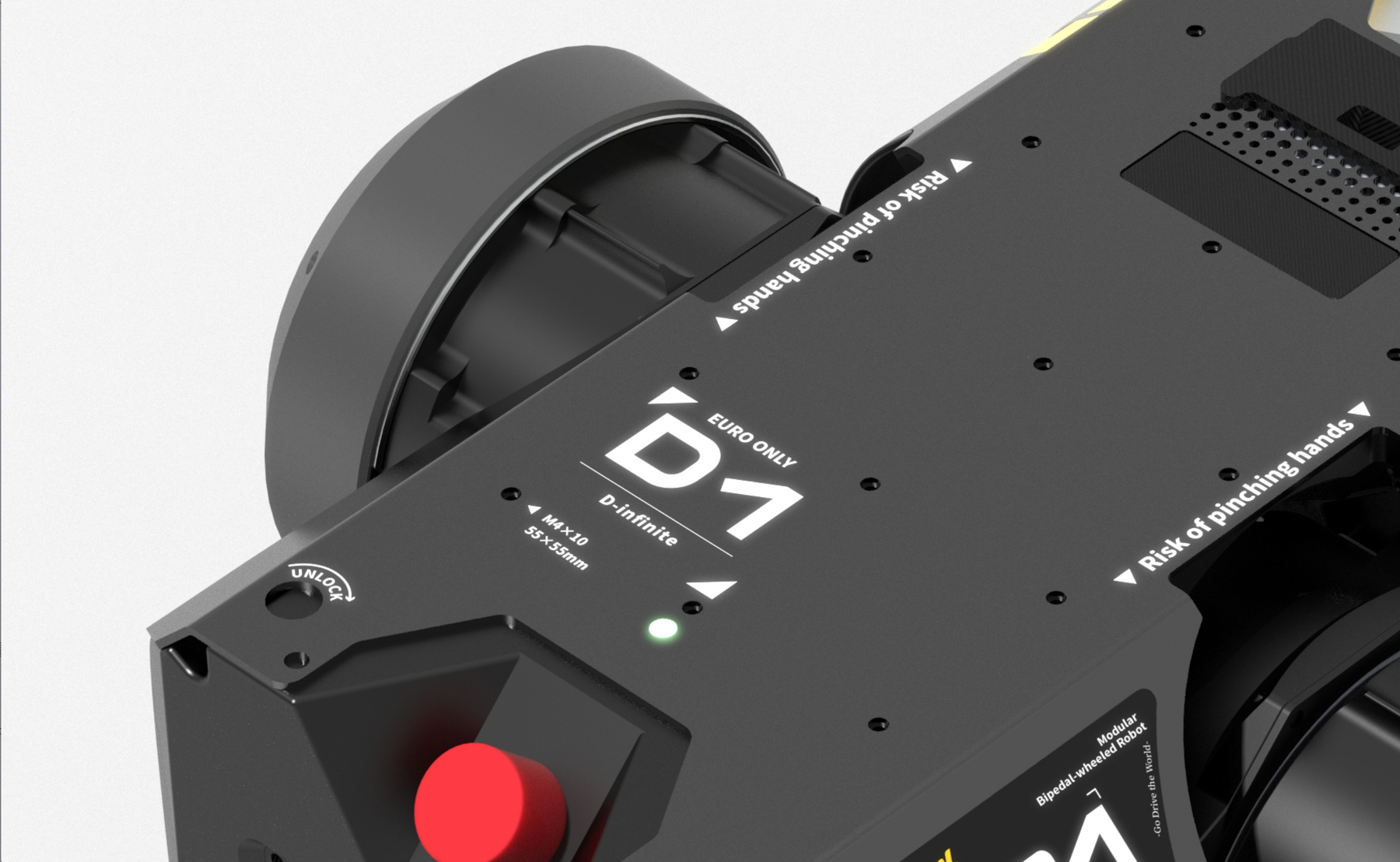
A research platform combining bipedal and quadrupedal mobility allows robots to switch between human-like interaction and terrain-adaptive movement within one system. Platforms such as the D-Infinite robot explore this approach by integrating multi-joint actuation, AI-based control, and flexible mechanical design. Tests from modern legged robots show walking speeds above 1.5 m/s, balance recovery within milliseconds, and reinforcement learning training using millions of simulation cycles.
Legged robotics has developed from single-purpose machines into flexible platforms that can operate across different environments. A robot designed only for bipedal walking can interact naturally with human spaces, but maintaining balance requires complex control because only two feet support the body during movement. Quadrupedal robots provide better stability because four contact points distribute body weight more effectively. A combined platform reduces the need to develop separate hardware systems for different applications.
In 2024, research groups continued improving robots that combine humanoid and quadruped abilities, focusing on walking efficiency, terrain adaptation, and autonomous control. Some advanced systems can change gait patterns within seconds, allowing movement from flat indoor floors to uneven outdoor surfaces without replacing hardware components.
The mechanical design of a dual-mode robot requires careful coordination between joints, actuators, and structural components. Modern platforms usually use electric motors with high torque density, allowing each joint to produce rapid force changes. For example, many research robots use more than 10 actuated joints, with some humanoid systems exceeding 30 degrees of freedom. Higher joint flexibility allows robots to adjust posture, maintain balance, and perform complex movements.
A single research platform supporting both locomotion types also improves testing efficiency. Researchers can compare different movement strategies using identical sensors, processors, and mechanical structures. Instead of comparing separate robots with different specifications, engineers can evaluate how body configuration affects speed, stability, and energy consumption.
| Locomotion mode | Main advantage | Typical application |
|---|---|---|
| Bipedal walking | Human-compatible movement | Indoor service, manipulation tasks |
| Quadrupedal walking | Better balance on uneven terrain | Inspection, outdoor navigation |
| Hybrid mobility | Flexible switching between modes | Research and autonomous systems |
The control system determines how effectively a robot can use different body configurations. Bipedal walking requires continuous estimation of body position, velocity, and external forces because small errors can cause instability. Quadrupedal movement uses coordinated leg patterns, such as walking and trotting gaits, which provide more stable contact with the ground.
Modern controllers combine traditional robotics methods with machine learning. Reinforcement learning allows robots to improve movement through repeated simulations before physical testing. Some studies train locomotion policies using millions of simulated steps, reducing the amount of physical testing required. In 2022 and 2023, several robotics projects demonstrated that simulation-based training could generate stable walking behaviors within hours to days depending on computing resources.
A unified mobility platform provides a larger dataset for AI development because the same robot can collect information from different movement patterns, including two-leg balance control and four-leg terrain adaptation.
Sensor technology also plays an important role in maintaining reliable movement. Most advanced legged robots combine cameras, depth sensors, inertial measurement units, and force sensors. An IMU can measure angular changes hundreds of times per second, while force sensors detect contact conditions between feet and the ground.
The combination of multiple sensors allows robots to understand their surroundings and adjust movement. For example, when a quadrupedal robot detects uneven ground, it can modify foot placement and walking speed. When the same platform changes to bipedal mode, the controller focuses more on balance and upper-body stability.
The D-Infinite robot represents the direction of compact research platforms designed for studying flexible mobility. Systems in this category combine direct-drive actuators, high-response control, and modular structures to support different robotic studies. More information about this type of platform can be found through the D-Infinite robot , which demonstrates how commercial robotic hardware is being developed for research applications.
Energy efficiency remains an important measurement when comparing different locomotion methods. Quadrupedal robots generally consume less energy during stable movement because their bodies remain closer to a balanced support area. Bipedal robots often require additional control calculations because maintaining upright posture needs constant adjustment.
| Performance factor | Bipedal mobility | Quadrupedal mobility |
|---|---|---|
| Balance requirement | High | Moderate |
| Human environment compatibility | High | Medium |
| Uneven terrain performance | Medium | High |
| Control complexity | High | Medium |
In industrial environments, robots with multiple mobility options can perform a wider range of tasks. A quadrupedal configuration can help robots move through factories, construction areas, or outdoor inspection sites. A bipedal configuration allows interaction with tools, shelves, and equipment designed for humans.
Companies and research institutions have tested legged robots in environments such as warehouses, laboratories, and public facilities. In many demonstrations after 2020, robots achieved autonomous navigation over mixed surfaces, including stairs, ramps, and irregular ground. These tests usually involve hundreds of movement cycles to evaluate reliability.
A robot capable of selecting between two-leg and four-leg movement does not need to rely on one fixed walking style. The same hardware can be evaluated under different conditions, which helps researchers understand how physical design affects intelligent behavior.
The development of dual-mode mobility is also connected with embodied AI research. Unlike software systems that only process digital information, embodied robots must understand the relationship between physical movement and environmental changes. A robot learns not only from visual information but also from forces, balance changes, and contact with objects.
Future platforms will likely combine lighter materials, stronger actuators, improved batteries, and more efficient AI models. Current research focuses on reducing hardware weight while maintaining strength, increasing operating time, and improving autonomous decision-making during complex movement.
By combining bipedal and quadrupedal capabilities, one research platform can support studies ranging from locomotion algorithms to real-world robotic applications. With improvements recorded across mobility speed, sensor accuracy, and AI control methods between 2020 and 2025, this approach provides a practical direction for developing robots that can operate in both human environments and challenging outdoor conditions.
Start your discreet consult
Board-licensed physicians. NABP-accredited pharmacies. Plain-box shipping. From $1.20 a dose.
Start Online Consult — From $1.20/dose