
Personalisation Without Overfitting: Getting a Chat That Fits
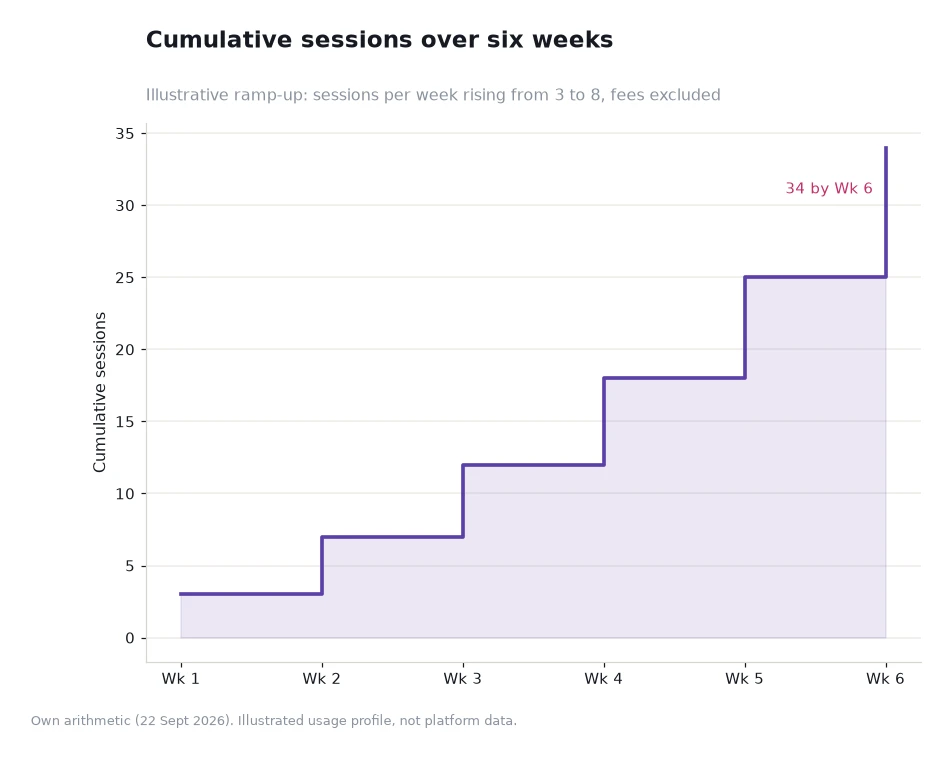
Personalisation goes wrong the same way a spreadsheet does: you tune it against one session and it stops working for anything else. The platform says its companions adapt to your personality and remember your preferences, which is a description of a gradual process, not a setting. Change one variable a week for six weeks and the 34 sessions in the ramp below give you five sessions to judge each change.

Key takeaways
- Change one thing per week, not five per session. Six weeks gives six changes and 34 sessions in which to judge them.
- Overfitting looks like a chat that only answers in one groove and cannot leave it when you change the subject.
- Test with a neutral question after any tuning: a character that can answer something ordinary is not overfitted.
- Keep a baseline session you never tune. Without one you cannot tell whether a change helped or the week did.
What personalisation is actually adjusting
Three things respond to tuning. The first is tone: how the character speaks, which you influence by how you write rather than by any single instruction. The second is content preference: what the character leans into, which is shaped by the material you bring and reward. The third is pace: how quickly an exchange moves and how much is said in each message, which changes as soon as your own messages change length.
Because all three move at once, the temptation is to instruct all three at once. That is where overfitting starts. A character told to be terse, clinical, playful and slow in a single opening message is not personalised; it is constrained, and constrained characters behave badly the moment a session goes anywhere the constraints did not anticipate.
The platform's own phrasing is a good guide to the right tempo: characters that adapt to your personality and remember your preferences are described as changing over time. Time is the operative word. Anything that claims to resolve your preferences in one session is describing a configuration screen rather than a conversation, and that is not what this product is.
Recognising overfitting before it ruins a card
Overfitting has a recognisable texture. Sessions start strong and then become interchangeable: the same rhythm, the same registers, and a visible effort to steer everything back to the pattern. The clearest test is a neutral message - something plainly outside the established groove - and the question is not whether the character enjoys it but whether it can move at all.
The second symptom is brittleness about length. An overfitted conversation keeps producing replies of the same size regardless of what you send, because the pattern is doing the work rather than the immediate context. The third is a memory that has become an instruction: the character cites your earlier preferences as rules, which feels attentive for two sessions and confining by the fifth.
The fix is rarely a reset. Most overfitting is undone by widening rather than restarting: keep the card, change one variable, and spend a session or two exploring territory the pattern did not cover. Reserve the reset for the case where the pattern has produced an actual contradiction - and if you want that distinction argued properly, the AI chat blog covers session-level topics in the same practical register this article uses.
| Variable | What it changes | Sign of over-tuning |
|---|---|---|
| Tone | Register and vocabulary of the replies | Every reply sounds like the third message of the first session |
| Content preference | What the character leans into and asks about | It steers neutral topics back to one subject |
| Pace | Reply length and how quickly an exchange moves | Replies keep a fixed size no matter what you send |
| Framing or setting | Where the conversation is grounded | The setting is restated in every other reply |
| Memory reliance | How much earlier sessions weight the present one | Requests come back as rules rather than as context |
Worked example: six changes into 34 sessions
Take the ramp below, which is illustrative arithmetic rather than platform data: weekly session counts of 3, 4, 5, 6, 7 and 9, accumulating to 34 sessions across six weeks. If you change one variable per week, that is six changes, and 34 divided by 6 gives 5.7 sessions per change - enough to see an effect without measuring noise.
Contrast the alternative. Changing three variables at once every session gives 34 changes and, at most, one session of evidence for each, which is how a character ends up tuned to a single evening. The difference in evidence per change is 5.7 sessions against 1, a factor of nearly six, and that factor is the whole argument for slow tuning.
Now add the message side, since tuning also changes what you send: a light habit of 4 messages a day is 120 a month, a middle habit of 18 is 540, and a heavy one of 60 is 1,800. Six weeks of the middle habit is about 810 messages, which is more than enough evidence to judge six changes - and the reason a slow schedule is not slow at all once you count messages rather than weeks.
A six-week schedule that stays flexible
Week one: no tuning at all. Hold a baseline session with no instructions beyond the card's own description and write down what it felt like in one line. Weeks two to five: change one variable each week, in the order tone, content preference, pace, framing. Week six: change nothing and repeat the baseline session, then compare the two lines.
Keep the baseline card separate from the tuned one. If you tune everything you use, you lose the reference point that tells you whether a change helped, and you end up with a single card that is excellent for one narrow pattern and unusable for anything else. A second, untuned card costs nothing and answers the question.
When you do want to check what the platform claims on this front, read the source rather than a summary: the Crushon page for adult chat - https://crushon.ai/ai-sex-chat - describes the product as chat with Sex AI companions and states the adaptation and memory wording quoted above, which makes it worth holding beside your own experience after six weeks. If you want more cards to tune, the NSFW AI trends shelf gives twenty with their counters, which is a cheaper way to choose a second baseline than searching blindly.
Frequently asked questions
How often should chat settings be adjusted?
One change a week at most. Six weekly changes across 34 sessions works out at 5.7 sessions of evidence per change, which is enough to judge whether it helped.
What does overfitting a chat look like?
Replies that keep the same shape and pull every topic back to one subject, and a character that treats your earlier preferences as rules rather than context.
How do I undo overfitting?
Widen rather than restart: keep the card, change one variable, and spend a session or two in territory the pattern did not cover. Reset only if a contradiction appears.
One change a week, one line in the log
Write the baseline, then change a single variable each week and note the effect in one sentence. Six weeks and 34 sessions later you will have a tuned conversation and, more importantly, a record of which adjustments actually did something - because most of them do not, and the ones that do are usually not the ones you expected. If a change makes no difference after five sessions, leave it; the schedule is there to protect the card from being reshaped by a single evening.
Data: the platform's own wording on adaptation, memory and preferences, and card counters from the trending shelf, read 22 Sept 2026[1]. Session counts and message volumes are own arithmetic shown as an illustrative profile, not platform data. Written for readers who are 18 or older.